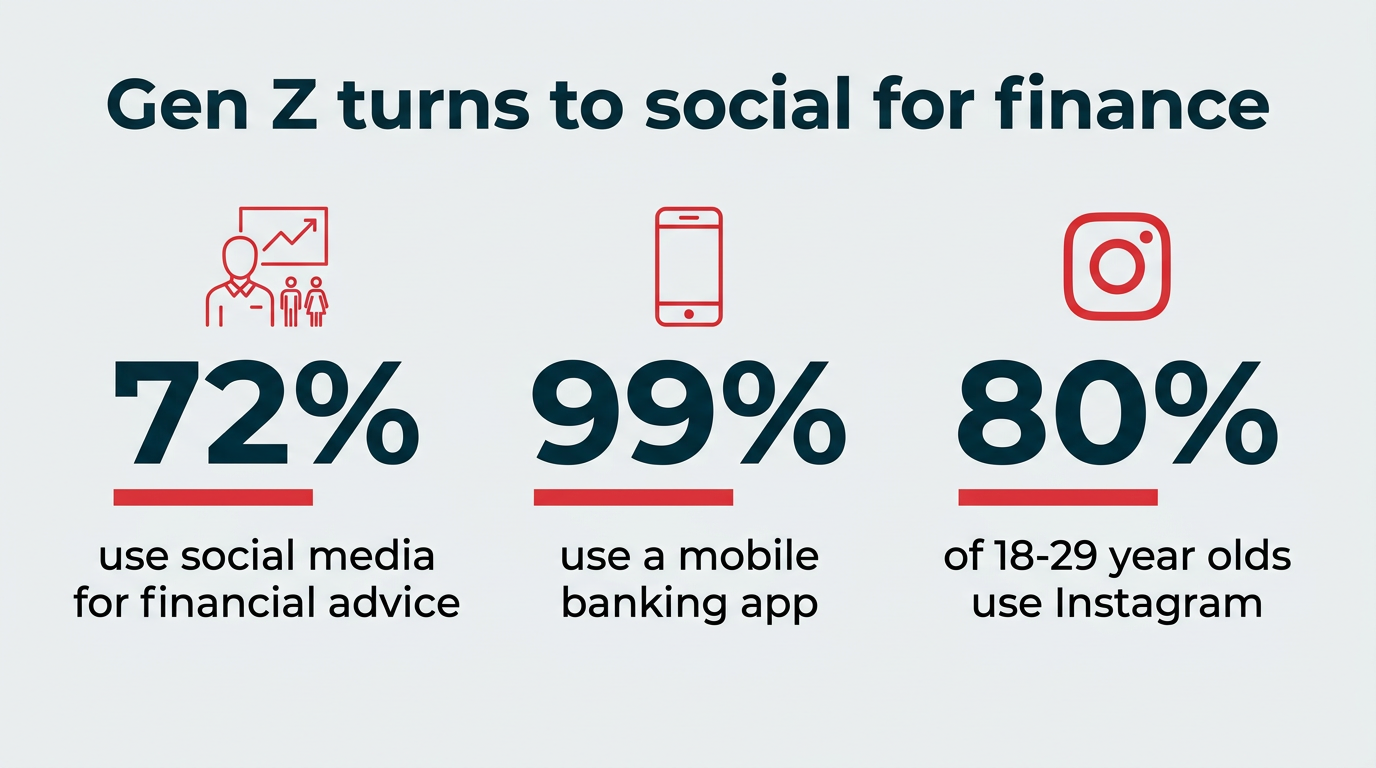
The 2026 social media guide for the financial services sector explores the shift of Gen Z and Millennials toward social platforms for financial advice, the importance of compliance processes amid strict regulations, and the distinct roles of each platform (LinkedIn, TikTok, Instagram, YouTube, X) in driving brand growth. For banks, insurance companies, and fintech firms, the primary function of social media is to reach younger audiences at an early stage while building trust within this highly regulated industry.
Core Dynamics in Next-Generation Financial Marketing
Financial institutions are using social media not merely as a marketing tool, but as a holistic channel for education, customer support, and lead generation. The biggest differentiator in the sector is the necessity of striking a balance between creativity and strict legal regulations.
The platform roles and strategic use cases highlighted in the guide are as follows:
- LinkedIn: The most effective arena for establishing thought leadership and professional networks.
- TikTok and Instagram: Ideal for visual storytelling and boosting brand awareness, particularly to reach younger audiences.
- YouTube: The primary video hub for breaking down complex financial concepts in detail and delivering educational content.
- X (Twitter): A practical channel utilized for real-time market commentary and instantaneous communication.
Artificial Intelligence and Risk Management
AI-powered tools are fundamentally transforming social media operations within the financial services sector. Brands are now accelerating their content creation workflows while simultaneously enhancing their risk monitoring and insight-generation capabilities through social data analytics. However, this transformation requires a robust compliance infrastructure behind it. To ensure operations run smoothly, clear policies, approval workflows, and secure archiving systems must remain at the center of the strategy.
Strategic Industry Takeaways
For institutions operating in the financial services space to succeed on social media, adopting a platform-centric approach is imperative. Because the dynamics of each channel differ, a one-size-fits-all content strategy should be replaced by customized approaches tailored to the expectations of each platform's target audience. Furthermore, the integration of AI tools must be supported by automated oversight mechanisms to boost operational efficiency without violating compliance processes.
Frequently Asked Questions
Why are compliance processes so critical for social media in financial services?
Because financial posts are subject to strict regulatory oversight, clear policies and approval workflows are essential to prevent risks such as misleading guidance, data leaks, or regulatory breaches.
Which metrics should banks and fintechs focus on measuring via social media?
Rather than focusing solely on likes and engagement, institutions should track early-stage audience reach, enhancements in customer trust, and lead generation conversion rates originating from social media channels.
*This report was prepared based on data published by the Hootsuite Blog.
💬 Comments
No comments yet. Be the first!
You must be logged in to comment.
🔑 Log In